Week 6 Reflective Response- Formation of the Earth and Atomic Bonds

This week in AP Biology we learned about the formation of Earth, as well as how life began and evolved into all of the complex species of today. The Earth was formed about 4.5 billion years ago, then life began around 4 billion years. The first life was single celled and very simple, but it evolved into more complicated and eventually multi cellular organisms. This relates to Big Idea 1.D: The origin of living systems is explained by natural processes.

Image result for formation of earth

We also learned about atomic bonds, which are the connections between valence electrons of atoms. Ionic bonds are where one atom transfers its valence electrons to a different atom, while covalent  bonds are where two atoms share valence electrons between themselves.

Image result for atomic bonds

One theory that I found interesting is endosymbiosis, which is where bacteria is engulfed by a larger cell and instead of breaking it down, it uses the bacteria to preform functions. Two examples of this is mitochondria and chloroplasts. This related to Big Idea 4.A.2: The structure and function of subcellular components, and their interactions, provide essential cellular processes. At first I thought that the bacteria was being used by the larger cell, but it turns out that they benefit from each other; the bacteria gets protection from the larger cell.

Image result for endosymbiosis

We also learned that extinction plays a big part in evolution, and that 99.9% of all species that have ever lived on Earth have gone extinct. To think that all of the species today are only 0.1% of all living things is incredible. Humans have caused many species to go extinct, but I think we can turn that around in the future by being conscious of our environment and the animals and plants that live there.

Image result for extinction


Sources:

Creation of Life Prezi

Creation of Earth Image

Atomic Bond Photo

Endosymbiosis Image

Extinction Image

Week 5 Reflective Response- Speciation

This week in AP Biology we learned about speciation, or reproductive isolation. Speciation is the idea that all species are created by a series of evolutionary processes. This is supported by Big Idea 1.B: Organisms are linked by lines of descent from common ancestry, and Big Idea 1.C.2: Speciation may occur when two populations become reproductively isolated from each other.

Image result for speciation

There are two main types of speciation; allopatric speciation and sympatric speciation. The first is when a species is separated by physical/geological means, and eventually the two populations will not be able to interbreed. The second is when the population stays in the same area, but is isolated my some mechanism of evolution. Both of these types of speciation lead to a split where one species becomes two.

Image result for speciation

We also learned about the effects that isolation has on a population. One of them is hybrid individuals may be created after the split of a species if they can reproduce with each other. This hybrid can either cause the two species to get further apart, come back as one species, or become stable between the two.

Image result for hybrid reinforcement

The rate of speciation is a constant debate in biology; whether it is gradual and slow, or a rapid and inconsistent process. At first I though that it was obvious that it would be gradual and constant, but as we learned about the jumps in the fossil records, I found it hard to decide one right answer. Small changes happen that slightly effects species, but it also has rapid bursts of change.

References:

https://prezi.com/_hs8uwqbpskm/ap-bio-evolution-6-speciation/

https://www.khanacademy.org/science/biology/her/tree-of-life/v/allopatric-and-sympatric-speciation

Week 4 Reflective Response- Measuring Evolution

This week in AP Biology we learned about what factors influence evolution, as well as how he can calculate the expected traits of a population using the Hardy-Weinberg theorem.

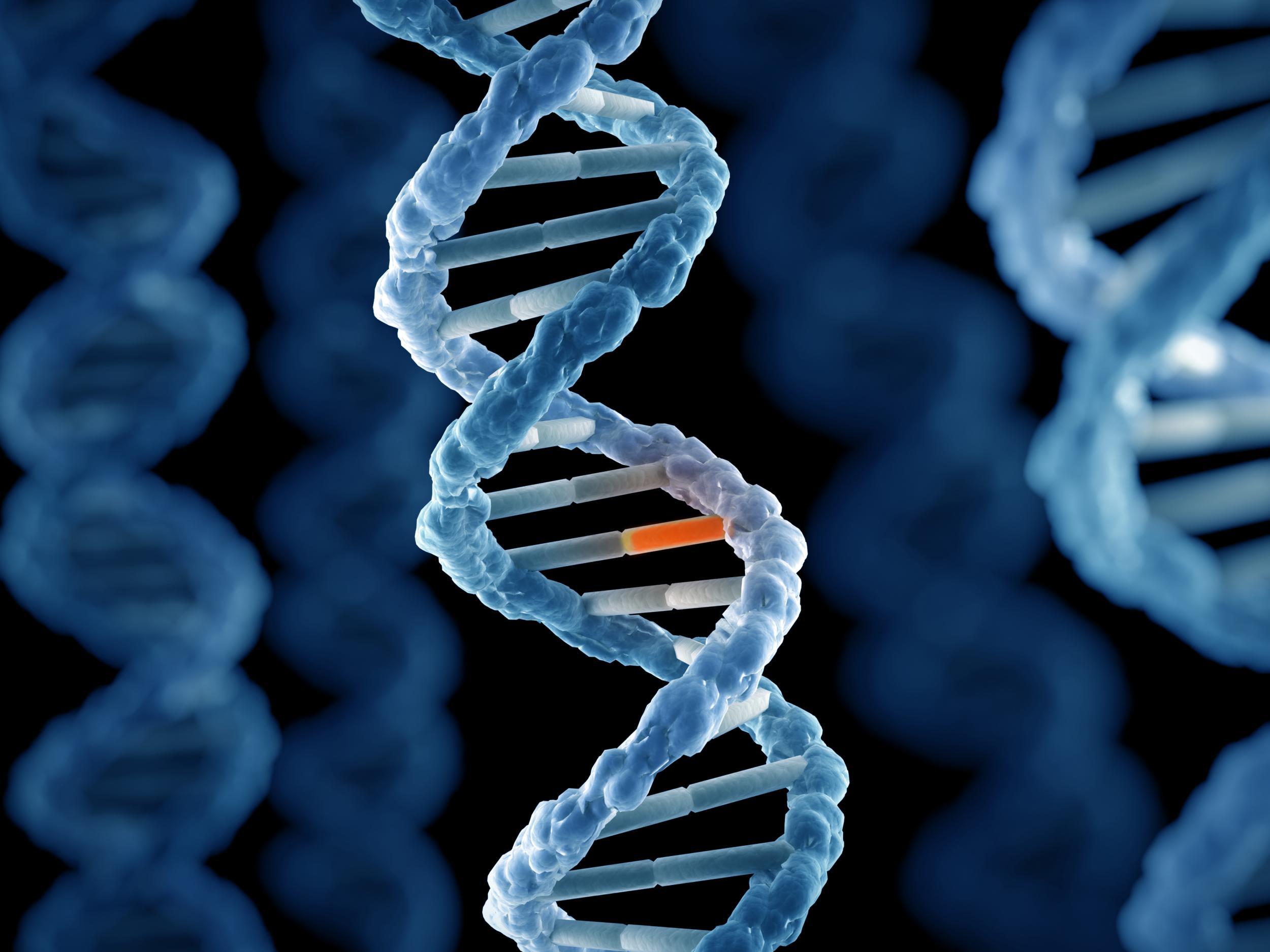
Image result for mutation

There are many factors that change how an organism evolves, but first you need to understand that populations evolve, not individuals. This is also stated in Big Idea 1.A; change in the genetic makeup of a population over time is evolution. Here are the five sources of evolution:

  1. Mutation: A change in DNA sequence that changes traits but may or may not affect fitness.
  2. Gene Flow: The movement of individuals and alleles in and out of a population.
  3. Genetic Drift: The effect of chance events on a population- if many individuals die out, the ones that survive will create a new population with similar traits.
  4. Non-Random Mating: Sexual selection- stronger individuals will have offspring, giving those offspring the best traits possible.
  5. Natural Selection: Different survival and reproduction rates due to changing environment.

When we learned these sources of evolution, I thought that gene flow and genetic drift would stop evolution, but I realized that they all work together to change populations over time.

The Hardy-Weinberg theorem is a way to calculate the expected physical or genetic traits of a population. We used this theorem to find the heterozygous, homozygous dominant, and homozygous recessive allele frequencies of a population.

Image result for hardy weinberg equation

Sources:

https://prezi.com/wypg7zbawzez/ap-bio-evolution-4-measuring-evolution/

https://i.ytimg.com/vi/1inA6ZLAgM4/maxresdefault.jpg


Create a website or blog at WordPress.com

Up ↑

Design a site like this with WordPress.com
Get started