Week 8 Reflective Response: Enzymes and the Cell Membrane

This week in AP Biology we learned about enzymes. They are biological catalysts, and they all end in -ase (amylase, etc.). Enzymes are similar to a lock and a key; only a certain substrate can bind with an enzyme’s active site. There is also an allosteric site, and when an inhibitor binds with this, it changes the shape of the active site, so that it cannot bind with the substrate anymore.

Image result for enzyme diagram

There are a few ways to increase the rate of the reaction:

  • Increase the temperature at which the reaction is occurring
  • Increase the substrate concentration
  • Increase the concentration of enzymes
  • Add co-factors (inorganic molecules that help enzymes [vitamins and minerals])


Sources:

Enzyme Image

Week 7 Reflective Response: Macromolecules and Cellular Energetics

This week in AP Biology we learned about macromolecules, which are large molecules made up of many atoms bonded together. We also learned about cellular energetics, which is how energy is used in cells.

Image result for macromolecules

There are four main types of macromolecules; carbohydrates, lipids, proteins, and nucleic acids.

  • Carbohydrates are sugars and starches, and they are made of carbon, hydrogen, and oxygen. They are used for short term energy storage and for structure.

Image result for carbohydrates

  • Lipids are fats, oils, and waxes, which are made up of carbon, hydrogen, and oxygen. These macrmolecules are used for long term energy storage and insulation.

Image result for lipids

  • Proteins are the most complex biological molecules, made of carbon, hydrogen, oxygen, nitrogen, and sometimes sulfur. They are used for all life functions.

Image result for proteins

In cellular energetics, organisms are energy processing systems. At first I thought organisms were much more than that, but as we learned more I realized that is basically what organisms do. This relates to Big Idea 2.A.2: Organisms capture and store free energy for use in biological processes.

Sources:

Macromolecules Image

Carbohydrates Image

Lipids Image

Proteins Image

Week 6 Reflective Response- Formation of the Earth and Atomic Bonds

This week in AP Biology we learned about the formation of Earth, as well as how life began and evolved into all of the complex species of today. The Earth was formed about 4.5 billion years ago, then life began around 4 billion years. The first life was single celled and very simple, but it evolved into more complicated and eventually multi cellular organisms. This relates to Big Idea 1.D: The origin of living systems is explained by natural processes.

Image result for formation of earth

We also learned about atomic bonds, which are the connections between valence electrons of atoms. Ionic bonds are where one atom transfers its valence electrons to a different atom, while covalent  bonds are where two atoms share valence electrons between themselves.

Image result for atomic bonds

One theory that I found interesting is endosymbiosis, which is where bacteria is engulfed by a larger cell and instead of breaking it down, it uses the bacteria to preform functions. Two examples of this is mitochondria and chloroplasts. This related to Big Idea 4.A.2: The structure and function of subcellular components, and their interactions, provide essential cellular processes. At first I thought that the bacteria was being used by the larger cell, but it turns out that they benefit from each other; the bacteria gets protection from the larger cell.

Image result for endosymbiosis

We also learned that extinction plays a big part in evolution, and that 99.9% of all species that have ever lived on Earth have gone extinct. To think that all of the species today are only 0.1% of all living things is incredible. Humans have caused many species to go extinct, but I think we can turn that around in the future by being conscious of our environment and the animals and plants that live there.

Image result for extinction


Sources:

Creation of Life Prezi

Creation of Earth Image

Atomic Bond Photo

Endosymbiosis Image

Extinction Image

Week 5 Reflective Response- Speciation

This week in AP Biology we learned about speciation, or reproductive isolation. Speciation is the idea that all species are created by a series of evolutionary processes. This is supported by Big Idea 1.B: Organisms are linked by lines of descent from common ancestry, and Big Idea 1.C.2: Speciation may occur when two populations become reproductively isolated from each other.

Image result for speciation

There are two main types of speciation; allopatric speciation and sympatric speciation. The first is when a species is separated by physical/geological means, and eventually the two populations will not be able to interbreed. The second is when the population stays in the same area, but is isolated my some mechanism of evolution. Both of these types of speciation lead to a split where one species becomes two.

Image result for speciation

We also learned about the effects that isolation has on a population. One of them is hybrid individuals may be created after the split of a species if they can reproduce with each other. This hybrid can either cause the two species to get further apart, come back as one species, or become stable between the two.

Image result for hybrid reinforcement

The rate of speciation is a constant debate in biology; whether it is gradual and slow, or a rapid and inconsistent process. At first I though that it was obvious that it would be gradual and constant, but as we learned about the jumps in the fossil records, I found it hard to decide one right answer. Small changes happen that slightly effects species, but it also has rapid bursts of change.

References:

https://prezi.com/_hs8uwqbpskm/ap-bio-evolution-6-speciation/

https://www.khanacademy.org/science/biology/her/tree-of-life/v/allopatric-and-sympatric-speciation

Week 4 Reflective Response- Measuring Evolution

This week in AP Biology we learned about what factors influence evolution, as well as how he can calculate the expected traits of a population using the Hardy-Weinberg theorem.

Image result for mutation

There are many factors that change how an organism evolves, but first you need to understand that populations evolve, not individuals. This is also stated in Big Idea 1.A; change in the genetic makeup of a population over time is evolution. Here are the five sources of evolution:

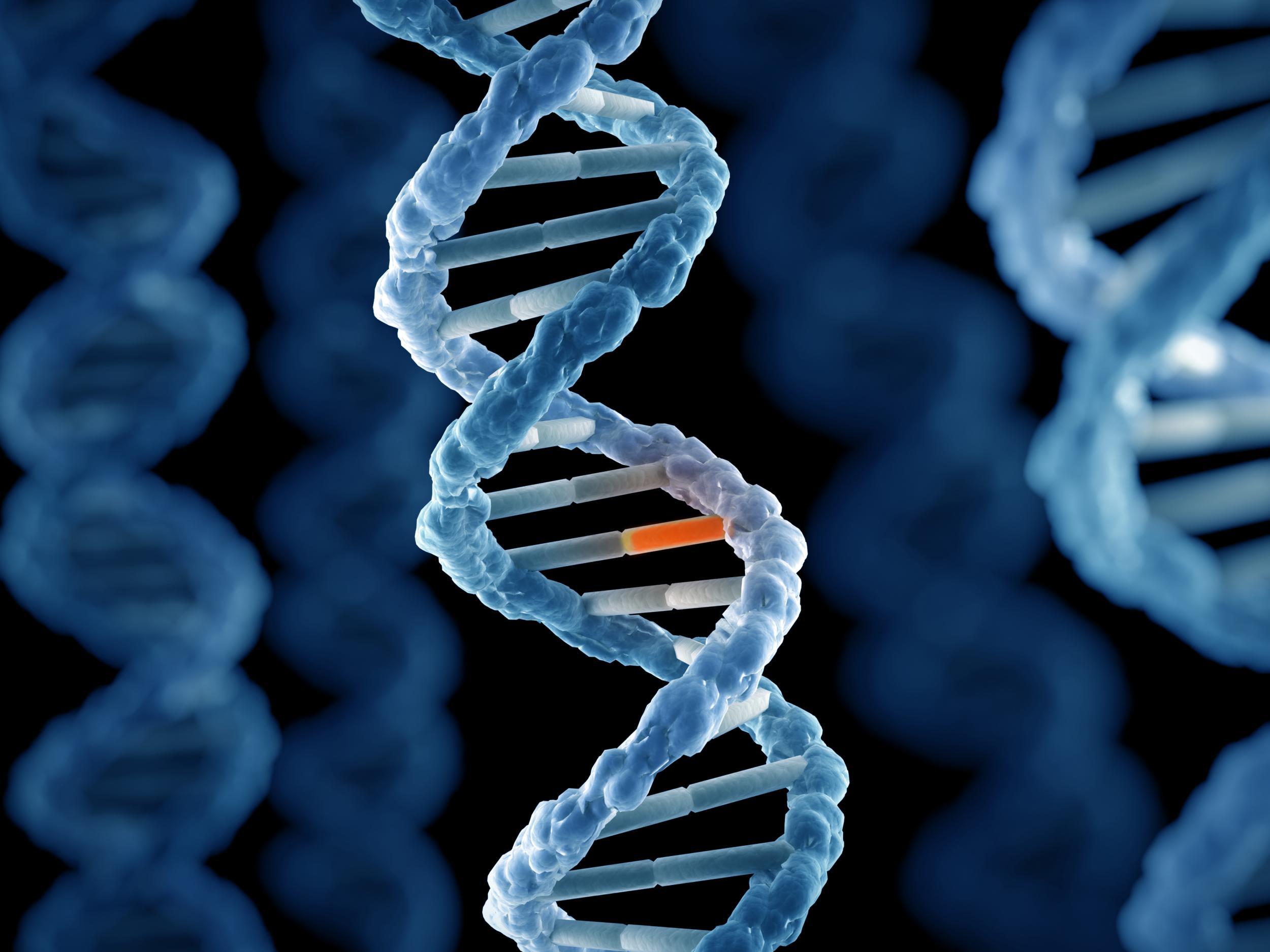
  1. Mutation: A change in DNA sequence that changes traits but may or may not affect fitness.
  2. Gene Flow: The movement of individuals and alleles in and out of a population.
  3. Genetic Drift: The effect of chance events on a population- if many individuals die out, the ones that survive will create a new population with similar traits.
  4. Non-Random Mating: Sexual selection- stronger individuals will have offspring, giving those offspring the best traits possible.
  5. Natural Selection: Different survival and reproduction rates due to changing environment.

When we learned these sources of evolution, I thought that gene flow and genetic drift would stop evolution, but I realized that they all work together to change populations over time.

The Hardy-Weinberg theorem is a way to calculate the expected physical or genetic traits of a population. We used this theorem to find the heterozygous, homozygous dominant, and homozygous recessive allele frequencies of a population.

Image result for hardy weinberg equation

Sources:

https://prezi.com/wypg7zbawzez/ap-bio-evolution-4-measuring-evolution/

https://i.ytimg.com/vi/1inA6ZLAgM4/maxresdefault.jpg


Week 3 Reflective Response- Evidence for Evolution

This week in AP Biology we learned about the evidence biologists have collected to support evolution. We also learned the difference between a hypothesis, theory, and law. A hypothesis is a testable statement about the universe. a theory is a major unifying framework, which is supported by all currently known facts.  A law is a deduced fact that will always be true in certain circumstances. I was at first surprised to find out that there are no laws in biology, but I then realized that anything in biology could be proven wrong at any time. This explains why there are only hypotheses and theorems, but not laws.

Image result for evolution

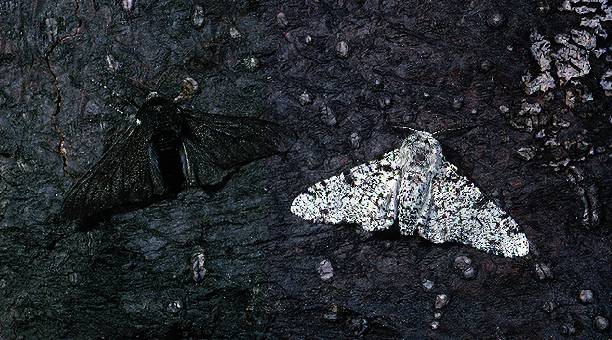
One piece of evidence for evolution is Peppered Moths. These moths come in two varieties; dark and light. Before the industrial period in England, light colored moths survived better in the lighter colored environment, so there were not as many dark moths. When England began burning coal and polluting, the forests and trees got darker, allowing the darker moths to become more likely to survive, meaning there were more of them. Then when there were laws against pollution, the light colored moths were better suited for the lighter environment, so there were more of them.

Image result for peppered moth

We also learned about the fossil record, which is stored in the layers of sedimentary rock. These layers get older and older the further you go down, and so do the animals. We can dig into rocks and find animals that do not live anymore. This supports evolution by showing the links between the bone structures of different species, ans also relates to Big Idea 1.B: organisms are linked by lines of descent from common ancestry.

Image result for fossil record

References:

https://www.britannica.com/science/fossil-record

https://prezi.com/kdtstsl3uat5/copy-of-ap-bio-evolution-3-evidence-of-evolution/

Week 2 Reflective Response- Evolution

Image result for evolution tree

This week in AP Biology we learned more about evolution, and also some theories of how life started.

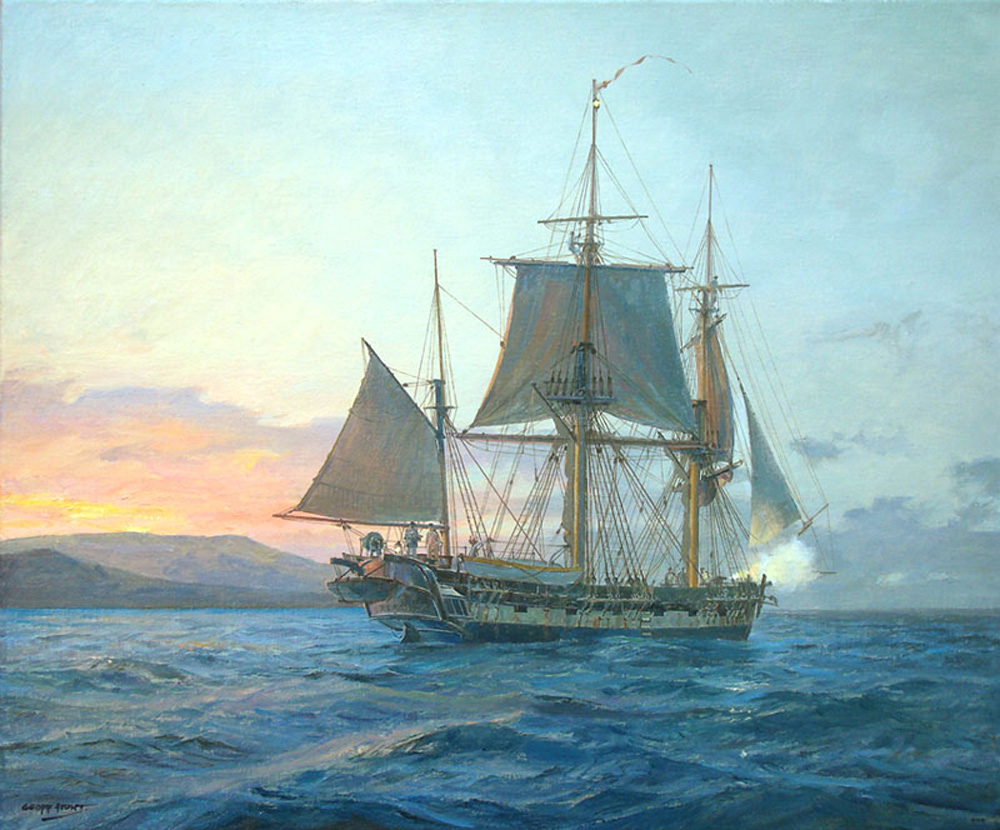
Evolution was first theorized by Charles Darwin while he was on board the HMS Beagle. As he circumnavigated the globe he collected specimens and other evidence to prove his ideas (1.A.4). After he went home, it took him 20 years to publish his theory of evolution. I thought this was an absurd amount of time to wait, but in that time period many people did not believe him, so he wanted to be sure he could prove it.

Image result for charles darwin on the origin of species

Image result for hms beagle


We also read some theories on how life was created on earth. One of them was the Replication-First (or Gene-First) Hypothesis, which explains how RNA most likely created the original form of life on Earth. When I read this, I wondered how the RNA could be created in the first place. I then learned that this hypothesis is dependent on the idea that organic molecules formed on Earth, including the nucleobases in RNA. RNA can store information, as well as carry out functions, something that DNA cannot do. Then the RNA bonds with random amino acids, and the good combinations survive to pass on their order of acids. They eventually form lipid layers around the RNA, creating the first cell, then DNA and proteins replace the RNA to carry out more complex functions of life. This relates to one of our big ideas, 1.D.1, which says “There are several hypotheses about the natural origin of life on earth, each with supporting evidence.”

Image result for RNA

This article helped me understand Darwin’s theory:

https://www.livescience.com/474-controversy-evolution-works.html

Here is a video that helped me understand the Replication-First Hypothesis:


Week 1 Reflective Response

This week in AP Biology we learned about standard deviation and standard error, which help describe statistics or graphs. We also learned about how natural selection and mutation can change populations rapidly.

Standard Deviation and Standard Error

Standard deviation expresses the spread of the data from the mean. This picture shows how standard deviation can be used to find certain percentages of the data, and also helped me understand how standard deviation works.

Image result for standard deviation

Standard error might sound the same, but it is completely different. It deals with how accurate the data is, or what the standard deviation of a large population should be. It can also be used to find what the mean could be if the experiment was done again.

Image result for standard error

Natural Selection and Mutation

We learned about the Galapagos finches, which are a perfect example of natural selection(1.A.1). Peter and Rosemary Grant studied the finches from 1973 to 1977. They found that when a drought came to the islands, there were only big seeds left by the end, and only finches with wider beaks survived. They saw in the next population that the mean beak depth was higher, indicating that natural selection had occurred.

Image result for galapagos finches

Mutation is another important mechanic of evolution. Mutation occurs in the DNA of an organism. We studied mice in New Mexico that lived on black rocks. Originally they were all colored like the sand, but when one mutated to have dark fur like the rocks, it survived better because predators could not see it. Then through natural selection the population changed over time to have more and more dark mice. The interesting thing about the mice is that there were different mice in different regions that got the same dark fur, but through different genes changing. I was very surprised by this; I thought it would be one gene that controlled the color of mouse fur. Mutations are also important because they diversify the gene pool, which helps populations survive an adapt.

Image result for rock pocket mouse black vs white

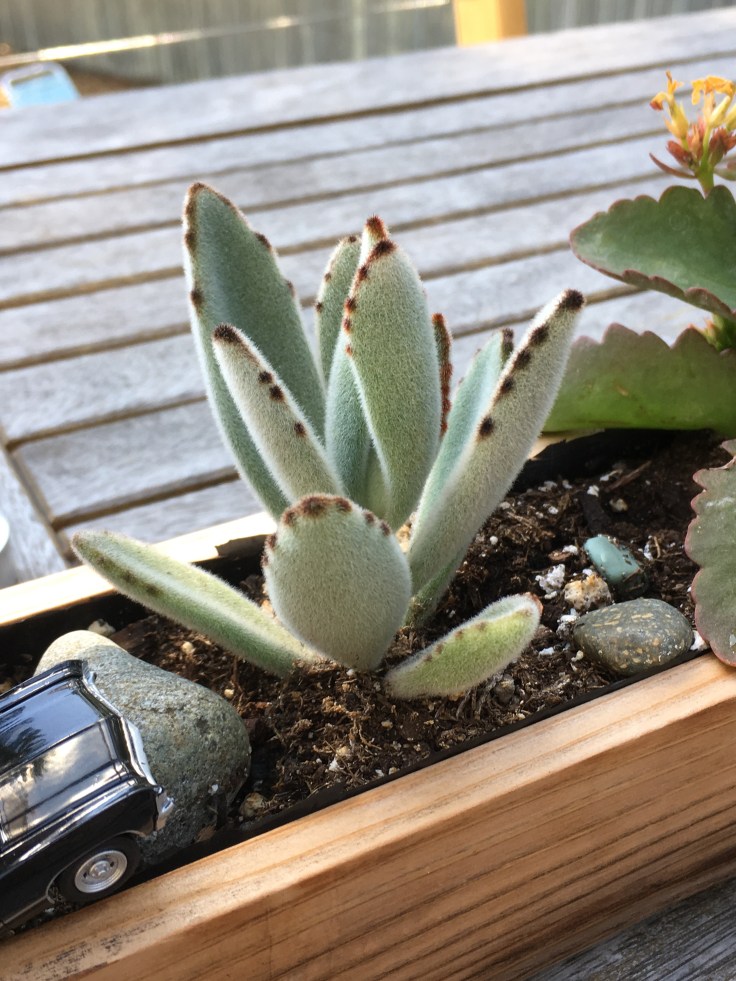
Xerophyte

IMG_6238.jpg

This is a picture of a succulent. Succulents are examples of xerophytes. Xerophytes are plants that need very little amounts of water. Succulents only need small amounts of water to survive.

Pollen

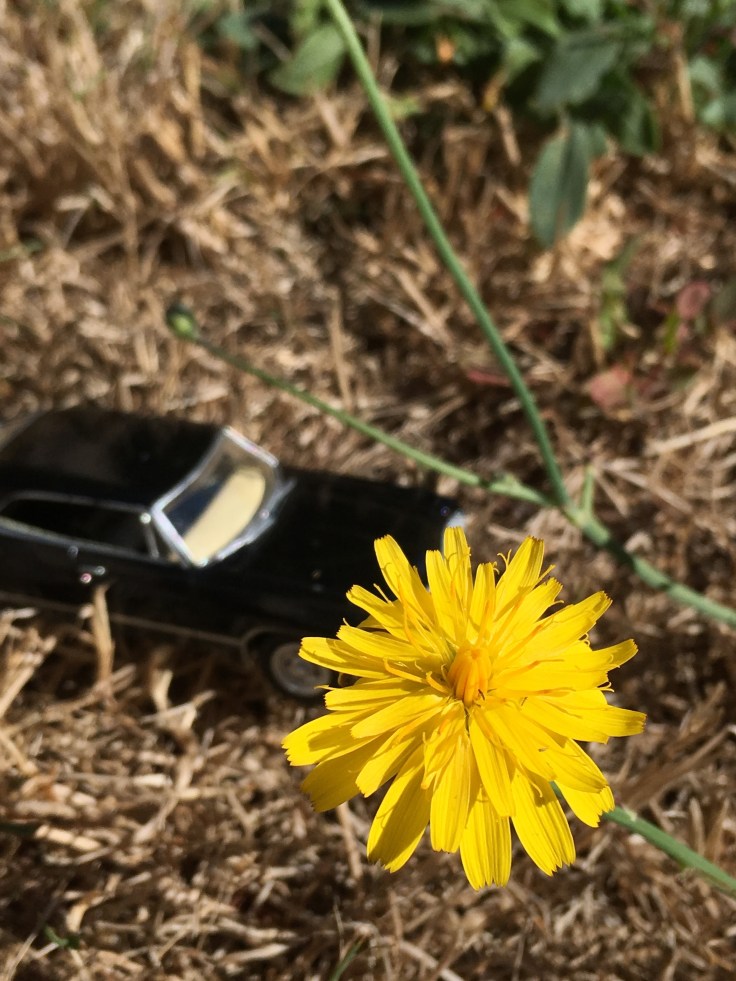
IMG_6236.jpg

This is a picture of a dandelion flower. Dandelion flowers are examples of flowers with pollen. Pollen is a fine powder that is made from the male flower parts. It fertilizes the seeds when they come in contact. This flower has fine yellow powder on it.

Create a website or blog at WordPress.com

Up ↑

Design a site like this with WordPress.com
Get started