Week 5 Reflective Response- Speciation

This week in AP Biology we learned about speciation, or reproductive isolation. Speciation is the idea that all species are created by a series of evolutionary processes. This is supported by Big Idea 1.B: Organisms are linked by lines of descent from common ancestry, and Big Idea 1.C.2: Speciation may occur when two populations become reproductively isolated from each other.

Image result for speciation

There are two main types of speciation; allopatric speciation and sympatric speciation. The first is when a species is separated by physical/geological means, and eventually the two populations will not be able to interbreed. The second is when the population stays in the same area, but is isolated my some mechanism of evolution. Both of these types of speciation lead to a split where one species becomes two.

Image result for speciation

We also learned about the effects that isolation has on a population. One of them is hybrid individuals may be created after the split of a species if they can reproduce with each other. This hybrid can either cause the two species to get further apart, come back as one species, or become stable between the two.

Image result for hybrid reinforcement

The rate of speciation is a constant debate in biology; whether it is gradual and slow, or a rapid and inconsistent process. At first I though that it was obvious that it would be gradual and constant, but as we learned about the jumps in the fossil records, I found it hard to decide one right answer. Small changes happen that slightly effects species, but it also has rapid bursts of change.

References:

https://prezi.com/_hs8uwqbpskm/ap-bio-evolution-6-speciation/

https://www.khanacademy.org/science/biology/her/tree-of-life/v/allopatric-and-sympatric-speciation

Week 3 Reflective Response- Evidence for Evolution

This week in AP Biology we learned about the evidence biologists have collected to support evolution. We also learned the difference between a hypothesis, theory, and law. A hypothesis is a testable statement about the universe. a theory is a major unifying framework, which is supported by all currently known facts.  A law is a deduced fact that will always be true in certain circumstances. I was at first surprised to find out that there are no laws in biology, but I then realized that anything in biology could be proven wrong at any time. This explains why there are only hypotheses and theorems, but not laws.

Image result for evolution

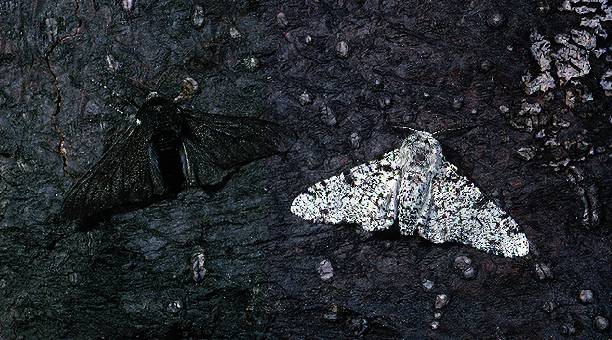
One piece of evidence for evolution is Peppered Moths. These moths come in two varieties; dark and light. Before the industrial period in England, light colored moths survived better in the lighter colored environment, so there were not as many dark moths. When England began burning coal and polluting, the forests and trees got darker, allowing the darker moths to become more likely to survive, meaning there were more of them. Then when there were laws against pollution, the light colored moths were better suited for the lighter environment, so there were more of them.

Image result for peppered moth

We also learned about the fossil record, which is stored in the layers of sedimentary rock. These layers get older and older the further you go down, and so do the animals. We can dig into rocks and find animals that do not live anymore. This supports evolution by showing the links between the bone structures of different species, ans also relates to Big Idea 1.B: organisms are linked by lines of descent from common ancestry.

Image result for fossil record

References:

https://www.britannica.com/science/fossil-record

https://prezi.com/kdtstsl3uat5/copy-of-ap-bio-evolution-3-evidence-of-evolution/

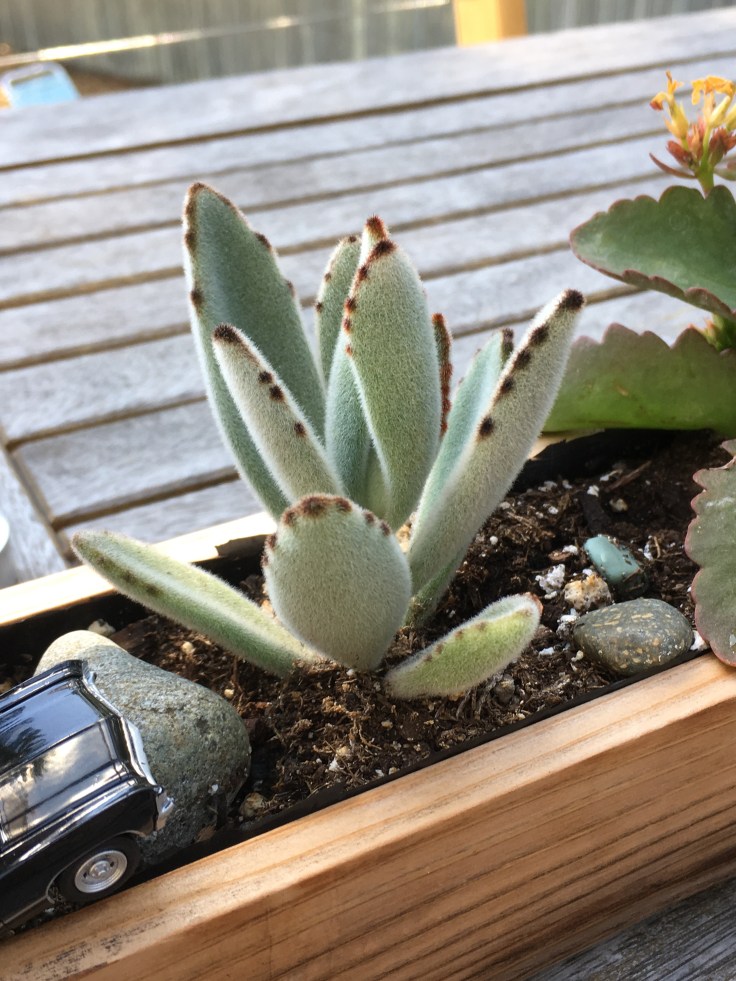
Xerophyte

IMG_6238.jpg

This is a picture of a succulent. Succulents are examples of xerophytes. Xerophytes are plants that need very little amounts of water. Succulents only need small amounts of water to survive.

Create a website or blog at WordPress.com

Up ↑

Design a site like this with WordPress.com
Get started