

This week in AP Biology we learned more about evolution, and also some theories of how life started.
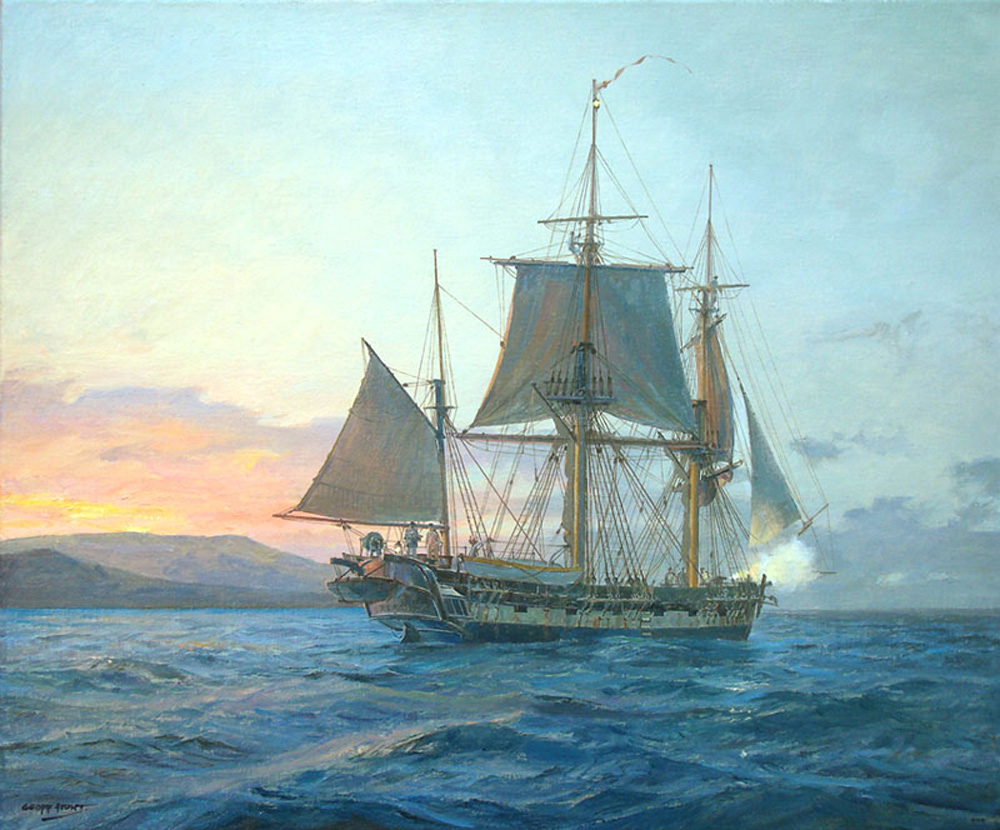
Evolution was first theorized by Charles Darwin while he was on board the HMS Beagle. As he circumnavigated the globe he collected specimens and other evidence to prove his ideas (1.A.4). After he went home, it took him 20 years to publish his theory of evolution. I thought this was an absurd amount of time to wait, but in that time period many people did not believe him, so he wanted to be sure he could prove it.

We also read some theories on how life was created on earth. One of them was the Replication-First (or Gene-First) Hypothesis, which explains how RNA most likely created the original form of life on Earth. When I read this, I wondered how the RNA could be created in the first place. I then learned that this hypothesis is dependent on the idea that organic molecules formed on Earth, including the nucleobases in RNA. RNA can store information, as well as carry out functions, something that DNA cannot do. Then the RNA bonds with random amino acids, and the good combinations survive to pass on their order of acids. They eventually form lipid layers around the RNA, creating the first cell, then DNA and proteins replace the RNA to carry out more complex functions of life. This relates to one of our big ideas, 1.D.1, which says “There are several hypotheses about the natural origin of life on earth, each with supporting evidence.”

This article helped me understand Darwin’s theory:
https://www.livescience.com/474-controversy-evolution-works.html
Here is a video that helped me understand the Replication-First Hypothesis:









 Mickie Wilkinson